Soft Skills for a Resume: Prove Each One on the Page
 Gowri Shanker·Oct 6, 2026
Header photo by Derek Coleman on Unsplash. A stock photo, not a screenshot of AceDraft or of any ATS.
Soft skills for a resume are the ways you work with people and with problems: communication, teamwork, patience, owning a mistake. They're the easiest lines on a resume to type and the hardest to get anyone to believe. This post goes one skill at a time, showing where each one can sit on the page and what evidence makes it believable.
I'll start with a confession, because it cuts against the advice below. The Soft Skills bar in AceDraft's free scan counts words. I built it to find the soft-skill terms in the job ad you paste, then check whether the same terms appear in your resume. So a resume that just lists "teamwork, communication, leadership, adaptability" can score higher on that bar than one that proves teamwork in a bullet without writing the word. My own tool rewards the label-listing this post asks you to drop.
Here's what I do about that. Soft skills carry a weight of 0.1 in the scan's score, against 0.4 for hard skills, and I added a second check meant to credit a sentence that describes a skill without naming it. I haven't tested that second check on the live site. So my advice is to use the job ad's own soft-skill word once, inside the line that proves it. A word-matcher finds the word, and a person finds the proof.
This post sits one level below my guide to the resume skills section, which covers the difference between hard and soft skills and how to lay out the list. Here I'm only dealing with resume soft skills, the ones you have to show on the page before anyone takes them seriously.
One more limit before the method. AceDraft is pre-launch, with no users and no hiring outcomes. No recruiter has read the sample lines in this post either. I wrote them, and they're illustrations with blanks in [square brackets], not anyone's real resume. I also haven't sent a resume through any employer's applicant tracking system (ATS), so nothing here says how one reads soft skills. If you'd like to test what I say about ATS software on a known file: check in presale page for our demo resume and you can verify our claims in the opensource tool we have mentioned there.
Key takeaways
- Read the soft skills off the job ad you're applying to. A general list of "skills employers want" can't tell you what this one employer asked for.
- Prove each one with something you did, in an experience bullet, a project line or one sentence of your summary.
- In one US survey of 237 employers (NACE Job Outlook 2025, published 9 December 2024), nearly 90% said they look for evidence of problem-solving on college students' resumes. The word to notice there is evidence.
- Limitation: AceDraft's Soft Skills bar counts matching words. I haven't tested how accurate it is, or whether its second check credits a skill you describe without naming.
What counts as soft skills for a resume?
Soft skills for a resume are working habits that aren't tied to one tool or task, such as how you explain things, share work, handle a problem or keep a promise. A spreadsheet formula is a hard skill. Explaining that spreadsheet to a manager who hates spreadsheets is a soft one.

My sources name a fairly short core. Penn Career Services (3 March 2026, written for people looking at social-impact and nonprofit jobs) lists communication, teamwork, people skills and leadership potential. NACE's Job Outlook 2025 survey of US employers, published 9 December 2024, names problem-solving, teamwork, written communication, initiative and a strong work ethic among the things employers look for on college students' resumes.
SHRM's guide for HR roles (8 December 2022, modified 21 December 2023) gives a much longer list, then warns you not to copy and paste all of those skills into your resume. Be selective, it says.
That warning is the useful part. Lists of soft skills online run long. One result on Google's first US page for "resume soft skills" on 5 October 2026 was a Pinterest pin offering 135 of them. Nobody needs 135.
Here's the test I use, on a resume or a CV, to tell a soft skill from an adjective. Can you describe a moment when you did it? "Patient" passes if you can name the customer and what they wanted. "Dynamic" fails, because I've never once seen anyone do dynamic.
Should I list soft skills in my skills section at all?
I'd mostly keep soft skills out of the skills section, because a soft skill sitting in a list is a claim with nothing next to it. It belongs inside an experience, project or volunteer entry, where the reader can see it happen. That's the position I took in my guide to what goes in a resume skills section, and this post builds on it.
Not every guide agrees with me, and the disagreement is worth knowing about. SHRM's guide (by Mary Southern, 8 December 2022, modified 21 December 2023) says to put the soft skills mentioned in the job description itself in the skills section. For the experience section, it advises describing soft skills with mostly indirect wording, so the behaviour shows and the label stays in the background.
So SHRM puts the label in the list and the proof in the entries. I can live with that compromise on two conditions. The term has to come from the ad word for word, and there has to be an entry below that backs it. Eight generic traits copied from a template don't qualify.
Plenty of people are stuck on this. OpenSEO put "soft skills for resume" at about 3,600 searches a month in India and 2,900 in the US when I checked on 5 October 2026. In Google's US results for "resume soft skills" that same day, the second result was a Reddit thread titled "The right way to write about soft skills on your resume".
Read that title again. People already know the words. They're asking how to make them count.
Which soft skills are worth showing for the job I want?
The soft skills worth showing are the ones the job ad asks for that you can back up with something you did. Read them off the posting in front of you, one posting at a time.

I won't give you a ranking of the soft skills employers want most. I have no data on that, and AceDraft has no hiring outcomes to count. The nearest real figures I found come from NACE, and they need their label attached.
In NACE's Job Outlook 2025 survey (published 9 December 2024), nearly 90% of responding employers said they look for evidence of problem-solving ability on college students' resumes, and nearly 80% look for strong teamwork skills. Written communication, initiative, a strong work ethic and technical skills each mattered to at least 70%. The survey had 237 employer respondents hiring US college graduates, with data collected between 5 August and 16 September 2024.
That's one US survey about hiring college graduates. I'm not stretching it into a rule for your job.
The word I'd take from it is evidence. NACE's 9 December 2024 article also says students should indicate these skills on the resume so they can talk about them further in an interview. Seen that way, a resume line is where the interview question comes from, so write the line you'd be happy to be asked about.
Here's the method I'd use, with the ad open next to your resume:
- Copy the ad's duties and requirements into a note.
- Underline every phrase about how the work gets done, as opposed to which tool does it. Things like "work with cross-functional teams", "explain technical issues to customers" or "manage competing deadlines".
- Next to each phrase, write the plain skill it points at, like teamwork or communication. Keep the ad's wording as well, because that's the version you'll reuse.
- Write down one moment you did each. A moment means a place, the people involved and what happened. No moment, no line on the resume.
- Put the skills from the first few duties ahead of anything in a "nice to have" line at the bottom.
The list you end up with is short, and it changes with every ad. That's how you know it was read off this one.
This is the soft-skill slice of a bigger job. I've written up the whole-resume version, with the steps I use, in how to tailor a resume to a job description without rewriting the lot.
How do I prove a soft skill in an experience bullet?
Prove a soft skill in an experience bullet by describing one thing you did that needed it, including who it involved and what came of it. The skill's name can stay out of the line, or appear once if the job ad uses it.
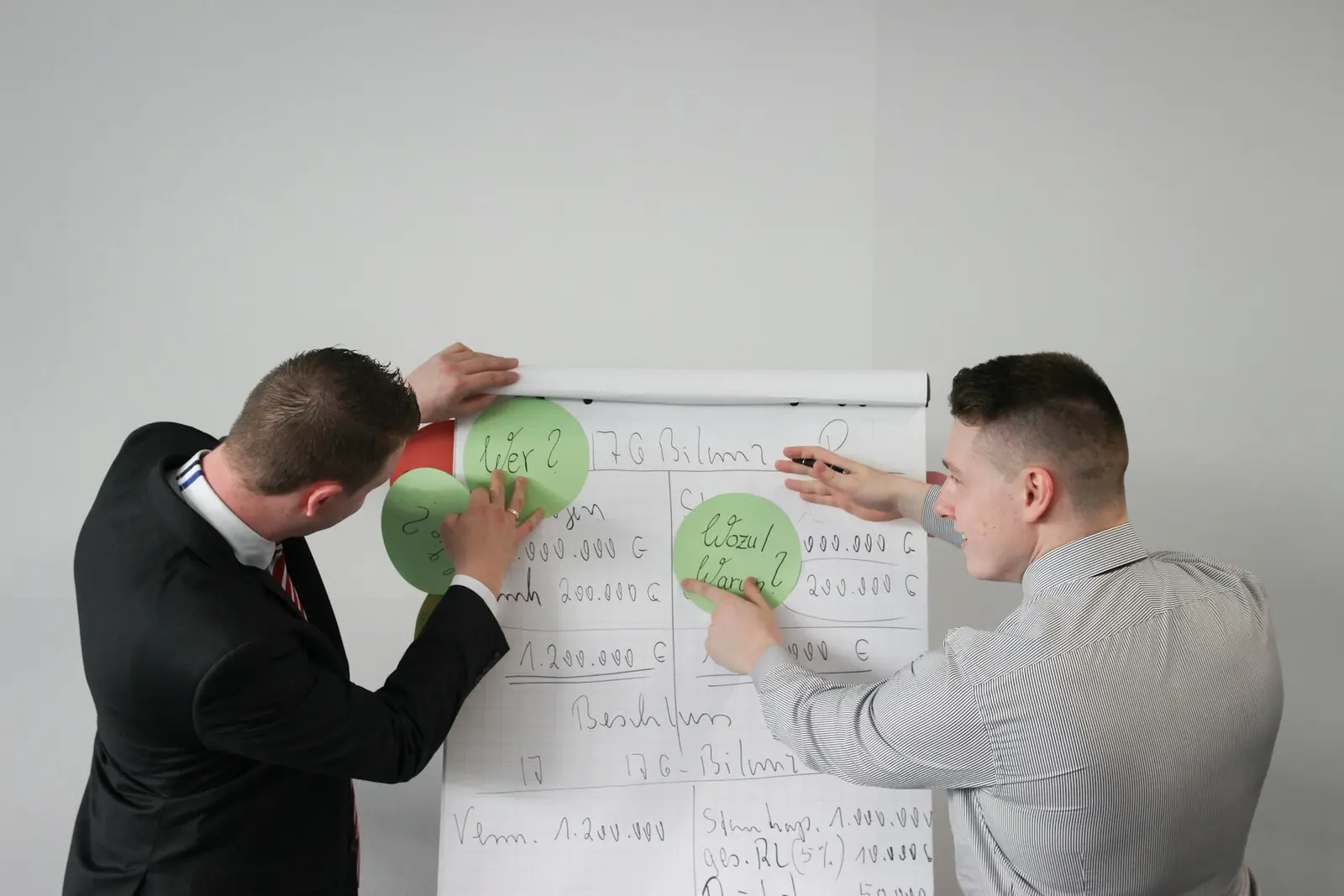
SHRM's guide (8 December 2022, modified 21 December 2023) advises mostly indirect wording for the experience section. Penn Career Services (3 March 2026) goes a step further and turns each skill into a question about evidence. For communication, Penn's 3 March 2026 post asks whether you've written reports, built web or social content, or given presentations. For teamwork, the same 3 March 2026 post points to academic project teams, volunteer teams, committees and team sports.
The table is my own way of applying that, skill by skill. Every row is a generic illustration, not taken from a real resume, and the last column is where each kind of proof runs out.
| Soft skill | Where it shows on a resume | Evidence that makes it believable | The limit |
| Written communication | An experience or project bullet | A named document and who read it: "[weekly update] for [N] [store managers]" | The line can't show how good the writing was. The resume itself is your writing sample |
| Presenting | Experience, project or volunteer line | The audience and its size: "presented [topic] to [N] [people]" | Says it happened, not that it went well |
| Teamwork | Experience or project bullet | The team's size, your part in it, and the shared result | Easy to write "we" and hide what you did yourself |
| Leadership | Experience, volunteer or committee entry | What you were responsible for: people, a budget, a deadline, a decision | A title like "Captain" on its own doesn't say what you did |
| Problem-solving | Experience bullet | The problem, and what changed after you stepped in | Needs an outcome you can state truthfully. A guessed figure undoes it |
| Initiative | Experience or project bullet | Something nobody asked you to do, and whether it stuck | My view: it reads badly if the line blames the people before you |
| Adaptability | Experience bullet or summary | A change you handled: a new tool, a new manager, a merged team or a changed role | Hard to show in one line, and often better saved for the interview |
| Attention to detail | Experience bullet, and the resume itself | A check you ran and what it caught | One typo on the page cancels the claim |
| Patience with customers | Experience bullet, often from part-time work | The kind of customer and the volume, plus one hard case | Volume figures have to be real counts, not estimates |
Soft skills examples for a resume, written as proof
These are illustrations I wrote for this post. The [brackets] are yours to fill, and if you can't fill one honestly, cut that part of the line.
Teamwork (illustration): Split a [final-year project] with [N] classmates; wrote the [data-cleaning] part and merged everyone's sections into one [report] before the deadline.
Leadership (illustration): Ran the [logistics] team of [N] volunteers for [the college fest], set the shift rota and handled [vendor] calls on the day.
Problem-solving (illustration): Noticed [refund requests] sat for [N] days without an owner. Set up a [shared tracker] so each one had a name against it.
Written communication (illustration): Wrote the [weekly stock update] read by [N] [store managers].
Patience with customers (illustration): Handled [returns and complaints] at the [billing counter], about [N] customers on a typical [Saturday].
Initiative (illustration): Built a [checklist for new joiners] that nobody had asked for; [the team kept using it after I left].
Here's the difference side by side, again as an illustration. A label-only line reads: "Excellent communication and teamwork skills." A line with proof reads: "Wrote the [weekly project update] for [N] [client contacts] and kept the [shared tracker] current for a [N]-person team." The second never says "teamwork", and you know far more about the person.
If the ad uses a soft-skill term word for word, say "stakeholder communication", I'd let that term into the matching line once: "Wrote the [monthly stakeholder communication] for [N] [regional managers]." Awkward? A little. It also hands a word-matching scan the exact term from the ad, if that scan treats the term as a skill.
Heads up. Keep every [N] honest. If you don't know how many people read the update, write who read it instead. A guessed number is an easy thing for an interviewer to ask about, and a hard one to explain.
Author's take. The [N] slots turned out to be my favourite part of writing these. Typing "Handled [N] calls a day" forces you to count. If you can't count it, you've learned something about the claim, and that's worth knowing before an interviewer finds it.
Can I mention soft skills in my resume summary?
Yes, a resume summary can name one or two soft skills, as long as the summary or the entries below it show where you used them. I'd pick the ones the job ad leans on hardest and leave the rest to the experience section.
A summary is only a few lines, so stacking adjectives eats the space you have. "Hard-working, detail-oriented team player with excellent communication skills" uses up a whole line and tells a reader nothing they could check.
An illustration with blanks: "[Retail] supervisor with [N] years on the shop floor. Trains new staff on [billing and returns] and takes the escalated complaints at a [busy city store]." Training staff and taking complaints carry the soft skills. Neither one is named.
I've collected more resume summary examples, with a method for writing your own, in a separate post.
In AceDraft's editor, the Professional Summary is one free-text box, with the placeholder "Enter your Resume Summary ..." and an AI Rewrite link above it. There's no separate Objective field, so an objective line goes in the same box.
AI Rewrite runs only when you're signed in with Google and a job description is pasted into the editor. In the signed-out guest editor, clicking it opens a pop-up about getting AI rewrites and leaves your text as it is. Signed in without a job description, it asks you for one.
I haven't judged what AI Rewrite does with soft skills in a summary. Whatever it suggests, check each soft skill in the result against something you did. A rewrite can't know whether you've ever trained anyone.
How do freshers show soft skills without work experience?
Freshers show soft skills through college projects, volunteering, committees, clubs, sport and part-time work, written up as entries with the same detail you'd give a job. A college fest you helped run is evidence. "Leadership" in a list isn't.
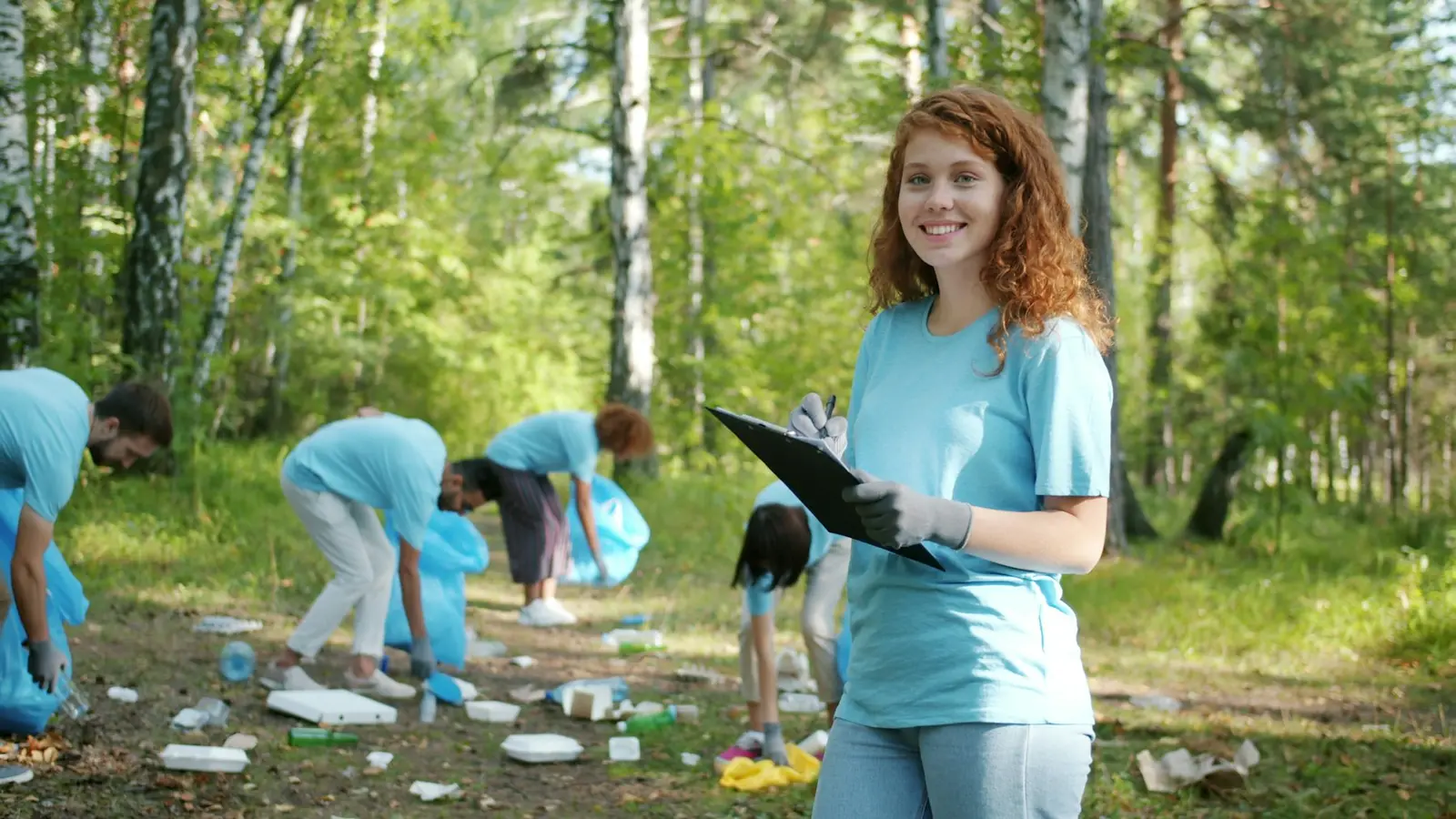
Most of the examples in Penn Career Services' 3 March 2026 post come from outside paid work: academic project teams, volunteer teams, committees and team sports for teamwork, and reports and presentations for communication. The same 3 March 2026 post says that if you have no evidence for a skill, you can go and get some, through Toastmasters, volunteering, or serving on a board or committee.
That's slow advice, but it's honest. You can't write proof you don't have yet.
AceDraft's guest editor has separate sections for Projects, Volunteer Details, Awards, Certificates Earned, Publications, Languages and Interests, alongside My Experience. A resume with no job history can carry its soft skills in those, written as entries that say what you did and who it involved.
Interests are the weakest of those for soft skills, in my view, unless the interest involved other people. "Reading" proves you can read.
Three more illustrations, aimed at freshers, with blanks to fill:
- A Projects line: "Presented the [group's] [app prototype] to [N] [faculty and classmates] and took the questions on [the database design]."
- For Volunteer Details, something like "Coordinated [N] volunteers for a [weekend book drive]; made the rota and swapped shifts when people dropped out."
- Part-time work counts. "Worked the [billing counter] at a [family-run store] on weekends through [college], including returns."
A note on demand, since I check these things. OpenSEO returned no data for "soft skills for freshers resume" in India when I looked on 5 October 2026. This section is here because freshers have the hardest version of the problem.
The long version is in my post on a resume without work experience. If you're switching fields instead of starting out, the soft skills you carry over from an old job are covered in resume for a career change.
Which soft-skill words should I stop using?
Stop using soft-skill words, such as "hard-working" and "quick learner", that you can't attach to a moment where you used the skill. These are the ones I'd cut first, with my reasons, and none of the reasons comes from a survey.
- "Hard-working." Any applicant could write it, so it can't tell you apart from anyone. Show the load you carried instead.
- "Quick learner." I've explained why "quick learner" says little in my post on objectives. Name the thing you learned and how long it took.
- "Team player" says you like teams. A project line says what you did in one.
- "Results-driven" and "go-getter", which are two ways of saying "please assume I'm good".
- "Excellent communication skills", in a sentence with no example attached. The irony writes itself.
- "Detail-oriented", with a typo two lines down. Proofread before you claim it.
One exception. If the job ad itself uses one of these phrases, use it once, inside a line that shows it. You're mirroring the ad's words, and the proof next to them stops the phrase from being empty.
Does AceDraft check the soft skills on my resume?
AceDraft's free ATS scan checks soft skills as words: its Soft Skills bar measures how many of the soft-skill terms found in your pasted job description also appear in your resume. As of 5 October 2026, I haven't tested how accurate that bar is.
Here's how I built it. The scan looks for skills in the job ad using a built-in list of about 8,800 entries, each tagged as a hard skill, soft skill, tool, certification or language. The Soft Skills bar is coverage: of the soft-skill terms it finds in the ad, how many your resume contains. The Score Breakdown has two other scored bars, Hard Skills and Job Title Alignment, and each one compares your resume with terms from the same ad.
Soft skills carry a weight of 0.1 in the score, against 0.4 for hard skills. So at equal frequency, a missing hard skill always outranks a missing soft skill. That's a weighting I'd defend, because a missing soft-skill word often just means you proved the skill without naming it.
Then there's the second check from the intro. After the word match, a second layer re-checks each missing keyword against your resume's sentences using embeddings, which compare meaning instead of spelling. A bullet that describes a skill without naming it can still get credit if it's similar enough. If the embeddings service isn't configured or fails, the scan silently falls back to word matching only.
Where the soft-skill side of the scan stops:
- The meaning check is untested. I haven't checked whether a proof bullet like "led a team of [N]" gets credited for leadership on the live site.
- If the job ad matches zero soft-skill terms, the bar shows "not scored" instead of 0%. That tells you about the ad.
- Keyword extraction wasn't re-tested for this post. An earlier batch of my posts recorded scans that returned zero keywords, so I won't claim the scan reliably pulls soft skills out of an ad.
- The Formatting and Content Quality bars show "coming soon", and neither is scored today.
You can run it from AceDraft's free ATS scan page. If a bar looks odd, I've also written up what each row of the score breakdown measures.
My honest reading is this. Treat the Soft Skills bar as a reminder of which words the ad used. Whether your resume actually shows those skills is a question it can't answer, and neither can I from here.
What haven't I tested?
I haven't tested any soft-skill line in this post with recruiters, hiring managers or real applications, so nothing here tells you which version gets a call back. Here's the full list, so you can weigh the advice for what it is.
- No recruiter review. I'm the only person who has read these illustrations.
- No outcome data. AceDraft is pre-launch: no users, no usage data, no reviews, no success rates.
- I haven't submitted a resume through Workday, Greenhouse, Lever, Taleo, iCIMS or any other employer's ATS, so I can't say how any of them treats soft skills.
- The scan's Soft Skills bar: accuracy untested by me as of 5 October 2026, and an earlier batch recorded scans with zero keywords.
- Whether the meaning check credits a described skill, like "trained [N] new staff" for leadership. Untested.
- AI Rewrite's suggestions for a summary or a bullet. Not judged.
- AceDraft's scan is its own scoring against one pasted job description. It isn't any employer's ATS, has no access to one, and nobody has checked its score against Workday, Greenhouse or any other named system.
- My outside sources are NACE, Penn Career Services and SHRM, read on 5 October 2026. NACE's figures come from one US survey of 237 employers, SHRM's guide is written for HR roles, and Penn's is aimed at social-impact jobs.
For the ATS side, there's a file you can check yourself: check in presale page for our demo resume and you can verify our claims in the opensource tool we have mentioned there.
That tool is ATS Screener (ats-screener.vercel.app). As of 5 October 2026, it's open source, simulates Workday, Oracle Taleo, iCIMS, Greenhouse, Lever and SAP SuccessFactors, and isn't affiliated with any of them. A simulator is still someone's model of those systems, which is the same caveat I put on my own scan. I haven't recorded any scores from it, and I won't quote one.
Use this if you have one job ad in front of you and can name a moment for each soft skill it asks for. Read the skills off the ad, write each moment as a line, and let the ad's own word in once where it fits.
Skip this if you want a ready-made list of the soft skills employers want most. I don't have the data to write one, and this method only works off a real posting.
Sources
- Kevin Gray, NACE, What Are Employers Looking for When Reviewing College Students' Resumes? (Job Outlook 2025). Published 9 December 2024; read 5 October 2026.
- Penn Career Services, University of Pennsylvania, Soft Skills: 4 Ways to Get Noticed During the Job Search. Published 3 March 2026; read 5 October 2026.
- Mary Southern, SHRM, How to Highlight Soft Skills in a Resume to Land a New HR Role. Published 8 December 2022, modified 21 December 2023; read 5 October 2026.
- OpenSEO keyword data for "soft skills for resume" and "soft skills for freshers resume", and US SERP data for "resume soft skills", checked 5 October 2026.
- AceDraft, AceDraft presale page. Read 5 October 2026.
Frequently asked questions
What are soft skills on a resume?
AceDraft's guest editor has no separate soft-skills field. You write them into My Experience, Projects, Volunteer Details or the Professional Summary box. The editor holds what you write; it doesn't judge whether a line proves a skill.
What are some examples of soft skills for a resume?
An example written as proof, with blanks to fill: "Split a [course project] with [N] classmates and merged everyone's sections into one [report]." I wrote that as an illustration; it isn't from a real resume. AceDraft's guest editor has My Experience and Projects sections for lines like that. It doesn't suggest which soft skills to pick.
How do I show soft skills on a resume?
Where a job ad uses a soft-skill word, I'd use it once inside the line that proves it. AceDraft's free ATS scan has a Soft Skills bar that checks whether the ad's soft-skill terms appear in your resume. I haven't tested how accurate that bar is.
Should I list soft skills in my skills section?
If you follow SHRM, keep it to the ad's exact terms and make sure each one has a line below that backs it. In AceDraft's guest editor, every Skills entry needs a Skill Category, a Proficiency Level and Keywords. In my view a level next to a soft skill like teamwork is something the page can't confirm.
Do soft skills go on a CV the same way?
AceDraft's guest editor builds one document with sections such as Professional Summary, My Experience, Projects and Volunteer Details, whichever word you use for it. I haven't checked it against any country's CV conventions.
Which soft skills should a fresher put on a resume?
AceDraft's guest editor has separate Projects, Volunteer Details, Awards and Certificates Earned sections, so a resume with no job history can still carry proof. The sections hold your entries; they don't decide which soft skills fit the job.
Will AceDraft's scan credit a soft skill I describe but don't name?
To try a known file first: check in presale page for our demo resume and you can verify our claims in the opensource tool we have mentioned there. As of 5 October 2026, that tool, ATS Screener, is open source, simulates Workday, Oracle Taleo, iCIMS, Greenhouse, Lever and SAP SuccessFactors, and isn't affiliated with any of them.
Where AceDraft's scan stops: the Soft Skills bar shows "not scored" when the job description matched zero soft-skill terms, Formatting and Content Quality say "coming soon", earlier runs I recorded returned zero keywords, and it's its own scoring against one pasted job description, not any employer's ATS.
Can AceDraft's AI Rewrite add soft skills to my summary?
Whatever it suggests, check each soft skill in the result against something you did. A rewrite can't know whether you trained new staff or handled the complaints, so a line it adds isn't proof until you can point to the moment.
Can I download my resume from AceDraft without paying?
The paid polished export adds a recruiter and ATS rewrite, a keyword-gap analysis and a polished PDF. It needs Google sign-in and is one payment per export, with no subscription. Neither export gives you a DOCX.
Comments
No comments yet. Be the first to comment.